
Topic: “ Public Engagement- The Our Singapore Conversation
A facilitator’s perspective and experience”
by Choon Seng Ng, IAF- Master& Assessor
From <The Power of Dialogue- Conversations with Masters> series

graphic recorder: Grace Wang
Written by Keli Yen
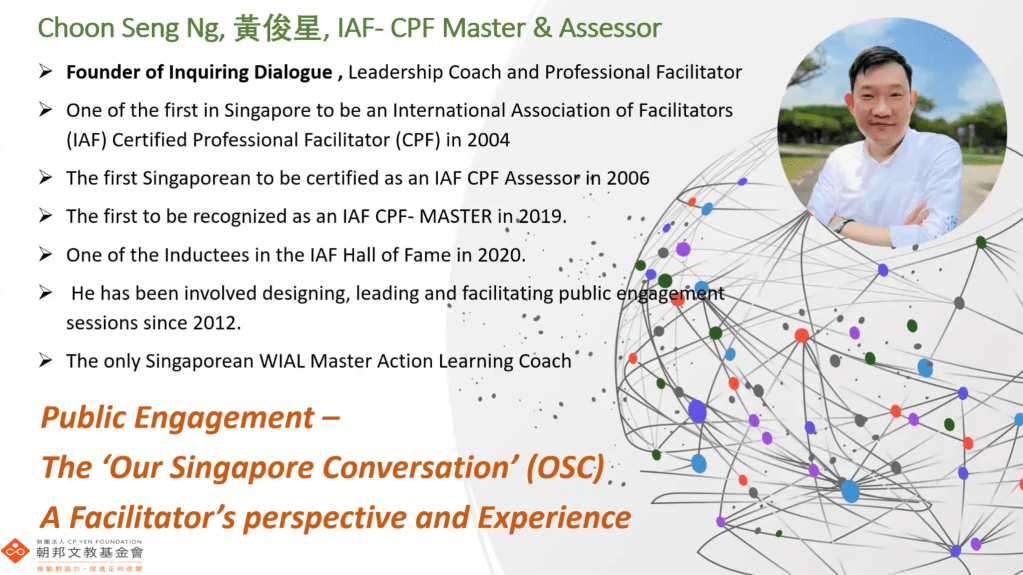
*Note: This is a personal sharing by Choon Seng and does not represent the official stand and perspective of the Singapore Government and its agencies.
Agenda
- Future of dialogue in the increasingly polarizing world
- Background and History Context Public Engagements in Singapore
- The role of facilitation and facilitators in public engagement
Background and Historical Context of Public Engagement in Singapore
In 2012 the Singaporean government invited Singaporean citizens to participate in the “Our Singapore Conversation” (OSC) project and for professional facilitators to help implement the project as volunteers. Here is one of the invitation letters from the Deputy Prime Minister Heng.
Swee Kiat:

I, Choon Seng Ng, participated as a designer of the overall OSC engagement process. Our objective was to engage as many Singaporeans as possible from all walks of life to co-create the future based on average people’s aspirations rather than the Singaporean government deciding the future and requiring the nation to follow, which had been the Singaporean way of governance for many years. From the start, we understood that this OSC dialogue would be an ongoing work in progress for the government, and is not a short-term event.
In the OSC engagement process, we held 650 dialogue sessions with about 47,000 people in face-to-face meetings over one year, amounting to about 1,645 hours of conversations in 7 languages: English, Mandarin, Malay, Tamil, Cantonese, Hokkien and Daiju.
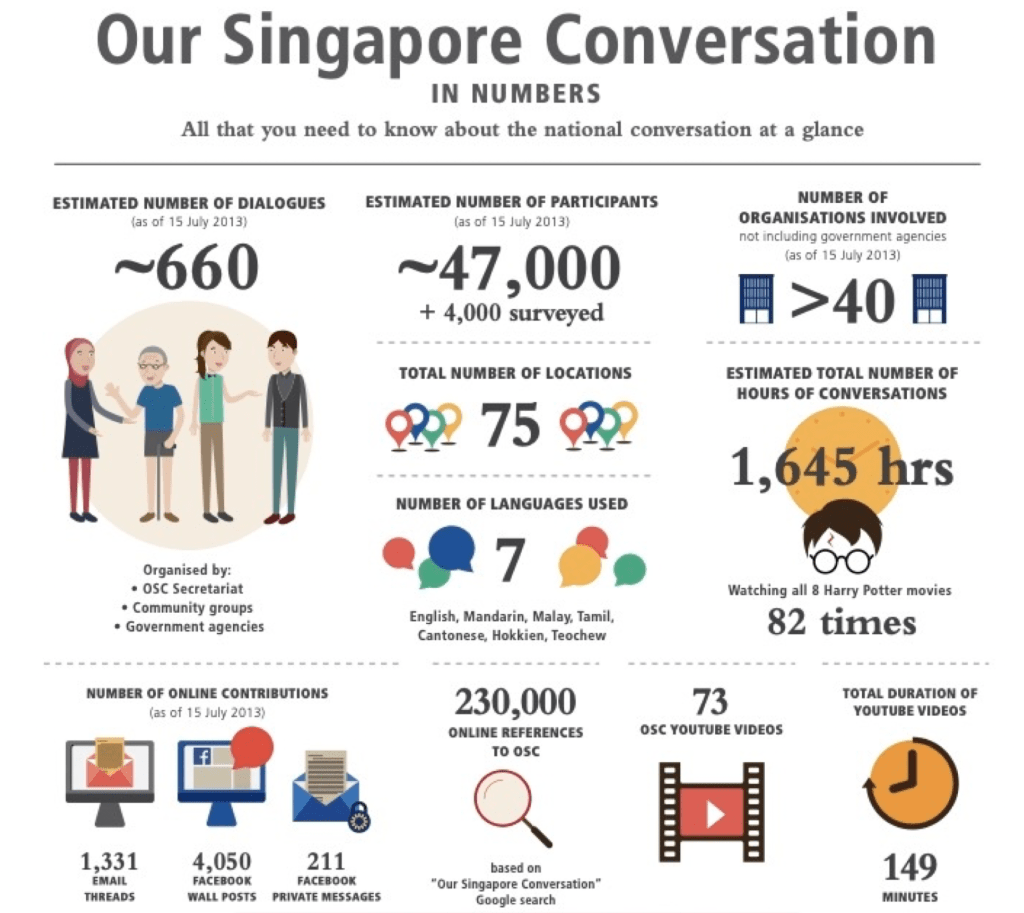

The OSC project was facilitated by a secretariat, community groups, government agencies and over 40 private organization. The 660 dialogue sessions were each about 3 hours long, requiring 2-5 facilitators for each session, which amounted to about 120 facilitators being involved in the project on an unpaid volunteer basis. You can see from these statistics that a great amount of resources were put into making the OSC project work.
The OSC engagement had two phases. Phase One focused on an open question “What do you want to see in Singapore in the future?” This phase produced 12 broad themes of responses listed below.

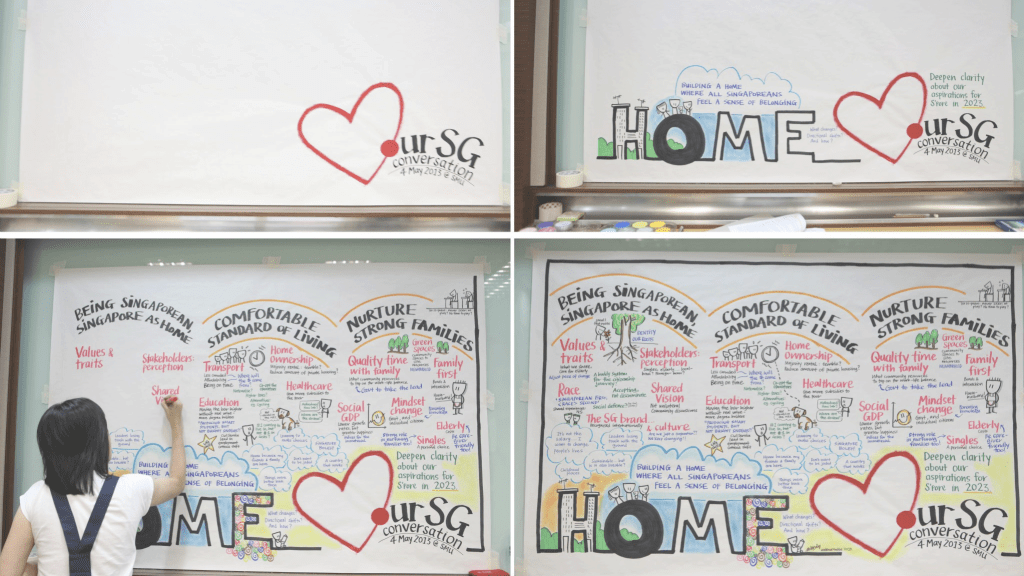
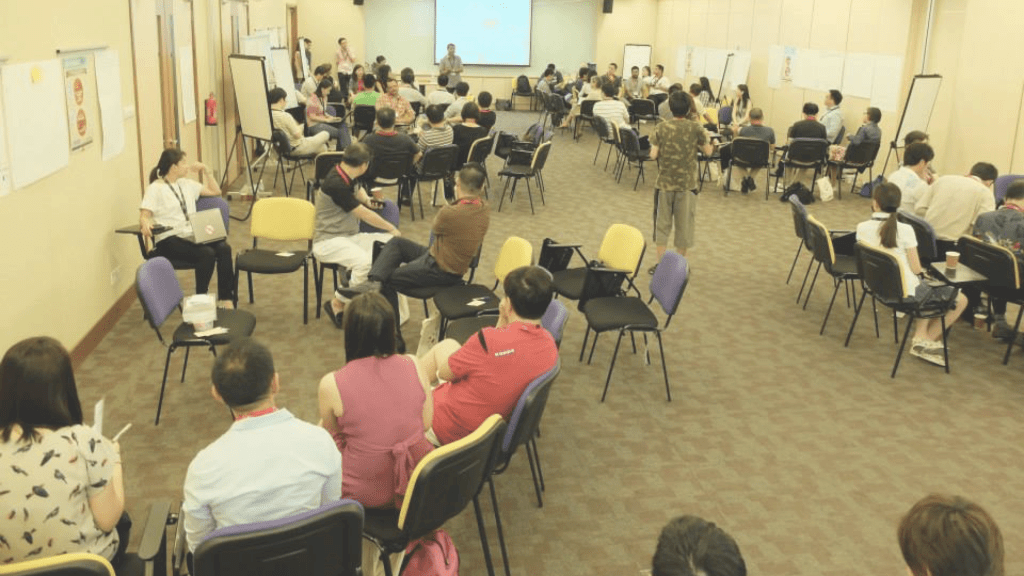
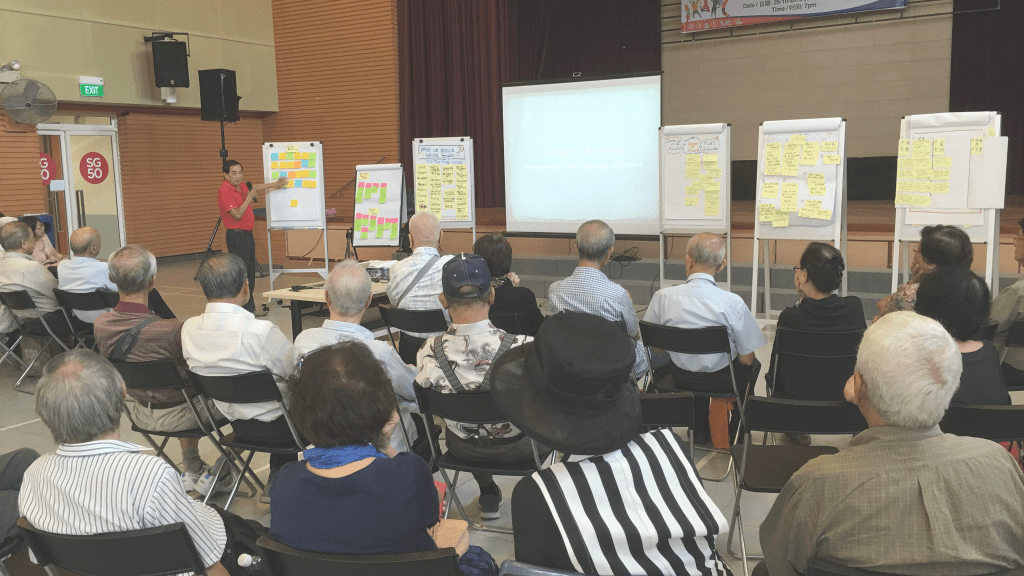
Phase Two focused on some of these topics and was a convergence process. At a typical dialogue session 30-50 people would show up at the venue at the advertised time. The process flow starts with a discussion in a large group, followed by discussions in smaller focus groups, and finally reflective discussion as a large group. The image below was drawn by a graphic recorder named Wendy Wong who captured key insights of the citizen dialogue into an artefact reflecting the group’s collective thought.
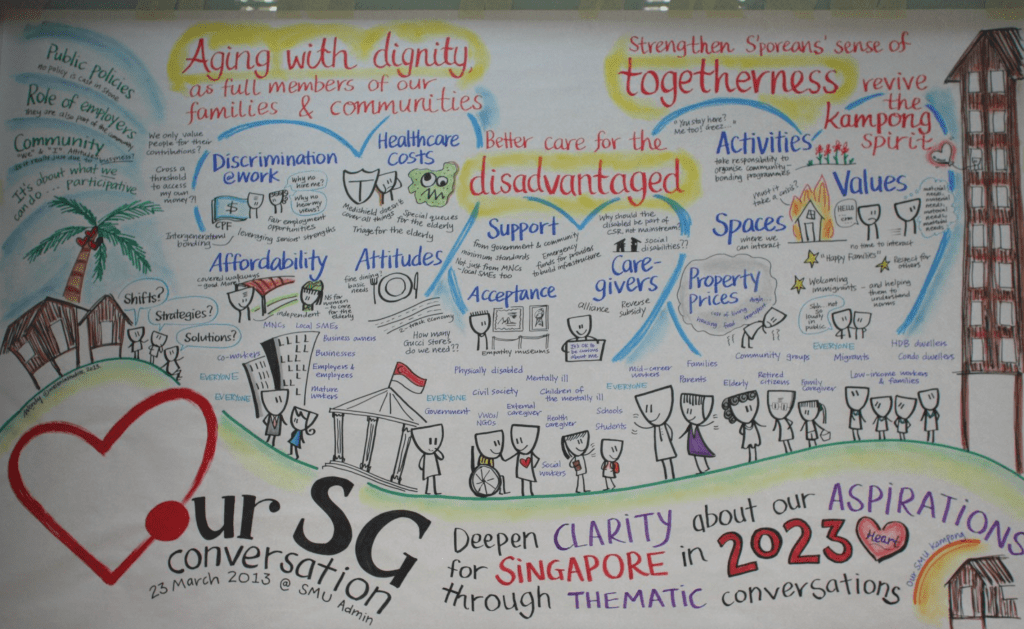
The government’s follow-up on the OSC dialogues was to craft policies to actualize these wishes in society.
The Historical Context of the OSC Project:
Why did the Singapore Government initiate this?
Singapore was founded under the first Prime Minister LEE Kuan Yew directive approach to governance. Over time as the administrations changed the leadership style towards an increasingly participatory democracy approach.
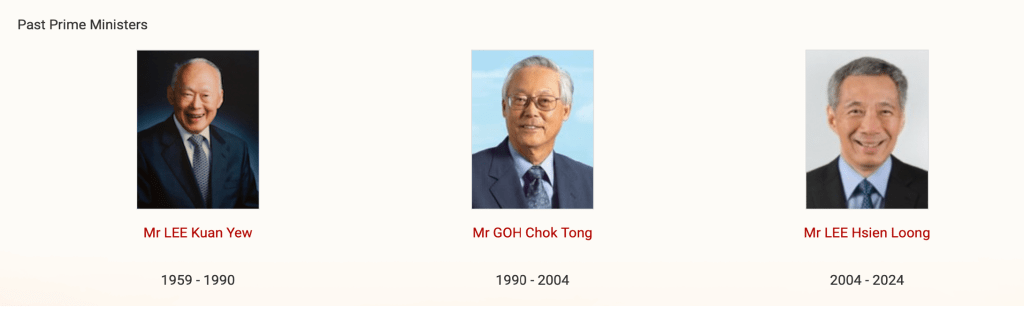
In the past, the PAP party won elections by 80%-90% of the votes, until 2011 when the vote for the PAP party dropped to 60%, causing the party and government to rebuild trust with the citizens and to show their acknowledgement that the previous way of governing needed to be changed to enable the citizens to give their feedback to the government in more ways than by elections alone, as described in the following two slides.
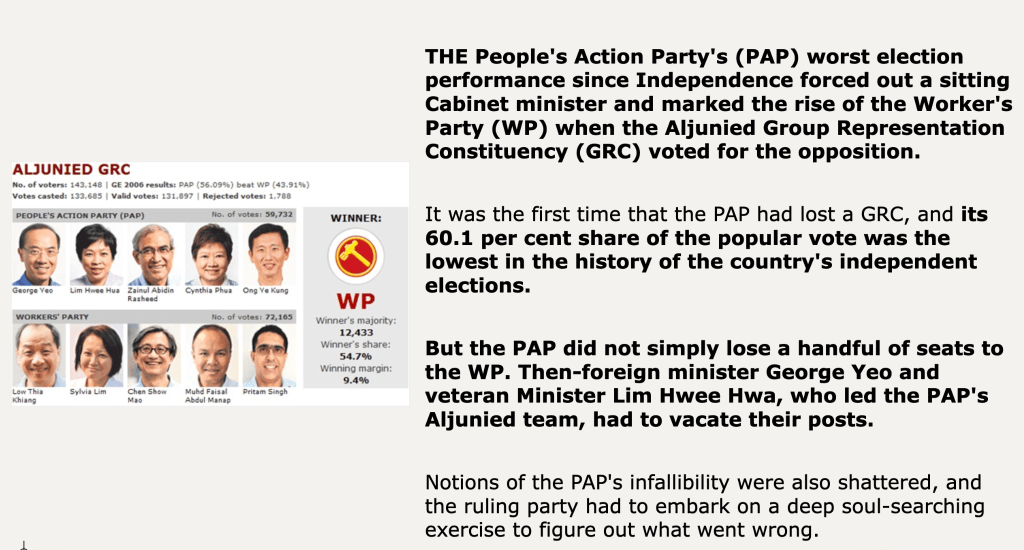

The Singaporean government knew about facilitation and dialogue but lacked the competence within the government to conduct the facilitation with citizens. That’s why the independent facilitators in the image below volunteered to partner with the government to design the OSC process.

Below are some pictures of the engagement process. The first picture shows a speaker who was a Member of Parliament, and at every session we had a government minister deliver the closing remarks so that the public could see that the government representatives were listening to the voices of citizens.


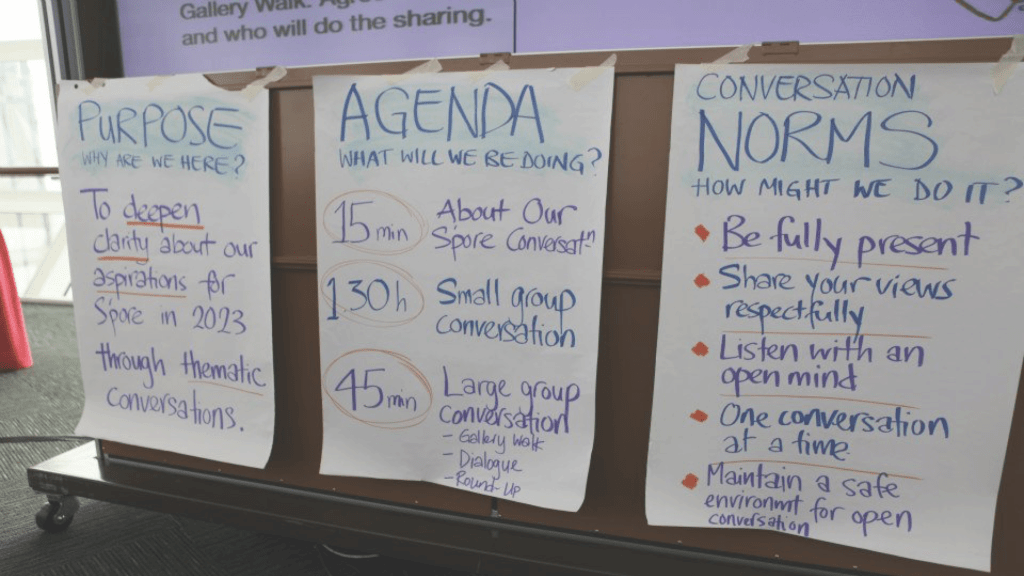
The purpose of the dialogue was to explore the future and to hear about what the citizens care about. It was understood that the work had no end point, nor were we trying to solve a particular problem. So the facilitator’s objective was to create a space where people could express their hopes, anguish and displeasure with the government; and could experience disagreement and mutual learning.


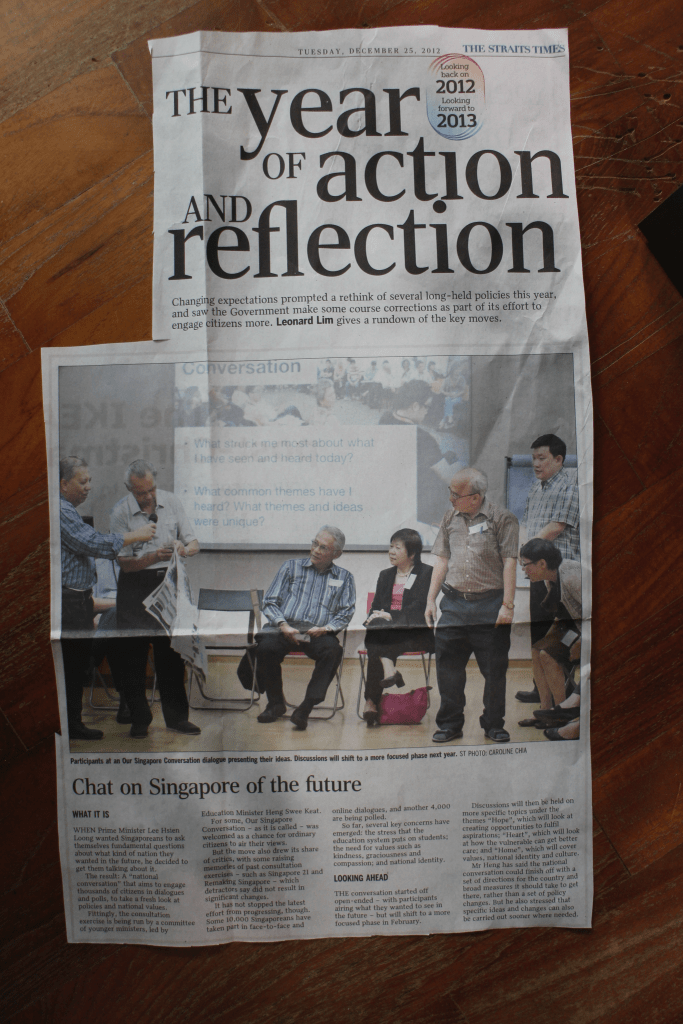
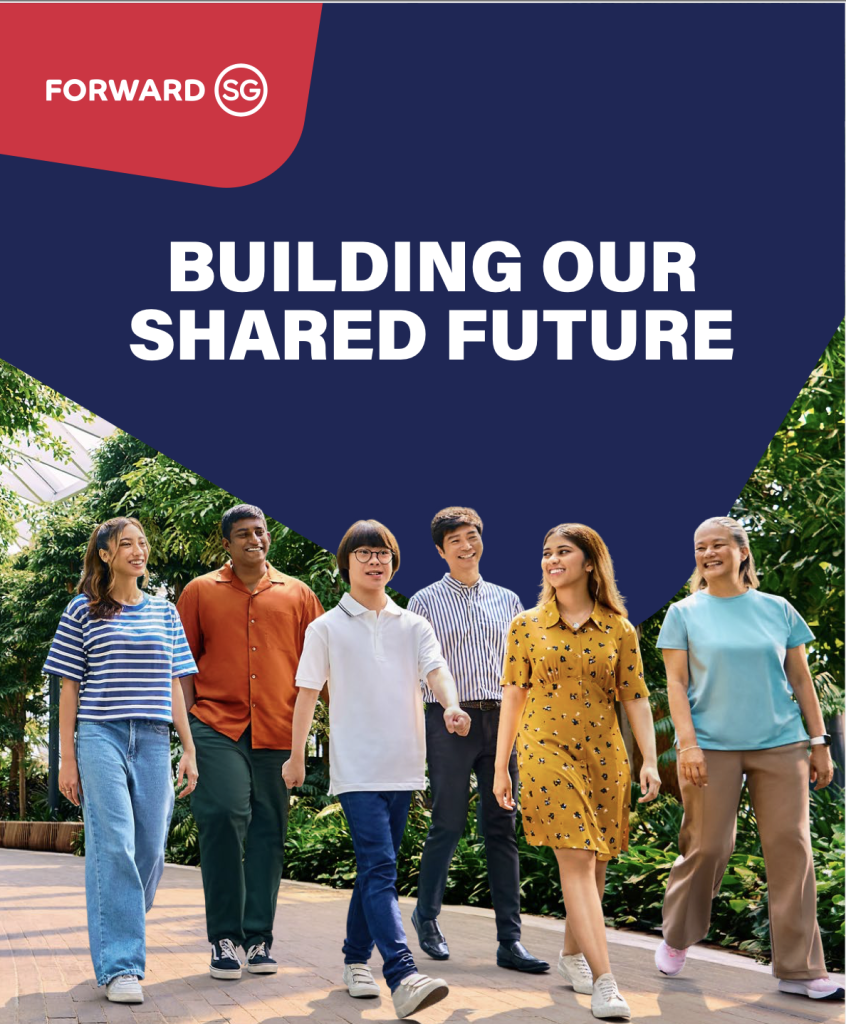
The OSC engagement process continues, more than 10 years since it was started, under the name “Forward Singapore”. It is now a massive public engagement event with renewed purpose because the social context has changed, the world has changed and Singaporean demographics have changed, so the process also continues to develop.
Question: How were participant expectations managed regarding what actions and outcomes would come from the OSC process?
The government made it clear it would listen openly to the feedback received from the public. However, it was not able to come back to each individuals on the implementation of their feedback given. I believe it was understood that this is an open dialogue to provide opinions to the government. Simply having the government consult the citizens and listen to them was a novel experience for the country with valuable in its own right.
Nevertheless, there were links that can be made between what was said in the OSC sessions and particular policies. For example, the OSC theme of the society valuing multiple definitions of success was conveyed to the Ministry of Education and as a result there was a de-emphasizing of the importance of school grades. For instance, at the primary school level, there’s been a removal of our streamlining system of pedagogy.
At the end of the OSC Process, the Prime Minister gave a speech at the national day celebration highlighting how the government directed the ministries and ministers to go into detail about the thematic ideas from the OSC dialogues. Consequently today we have a national healthcare insurance policy thanks to participants of the OSC raising the issue of their concern about healthcare bills. Therefore it is possible to connect the ideas generated by citizens in the OSC and real policy change and outcomes.
Another important outcome of the process is the experience of citizens talking directly with other citizens with whom they don’t normally associate, to hear and appreciate different perspectives and then to open up previously held assumptions about the other. I heard participants of different generations tell me that they were surprised to discover that people of the other age groups propose interesting and valuable ideas. As a society, we need to learn to converse with one another.
Some of my insights as a facilitator: I think it’s wonderful, interesting and different to work with government political office holders and with the political agenda. I had the opportunity to educate the government about the meaning and practice of facilitation and to build their internal capacity to continue engaging citizens in this way.


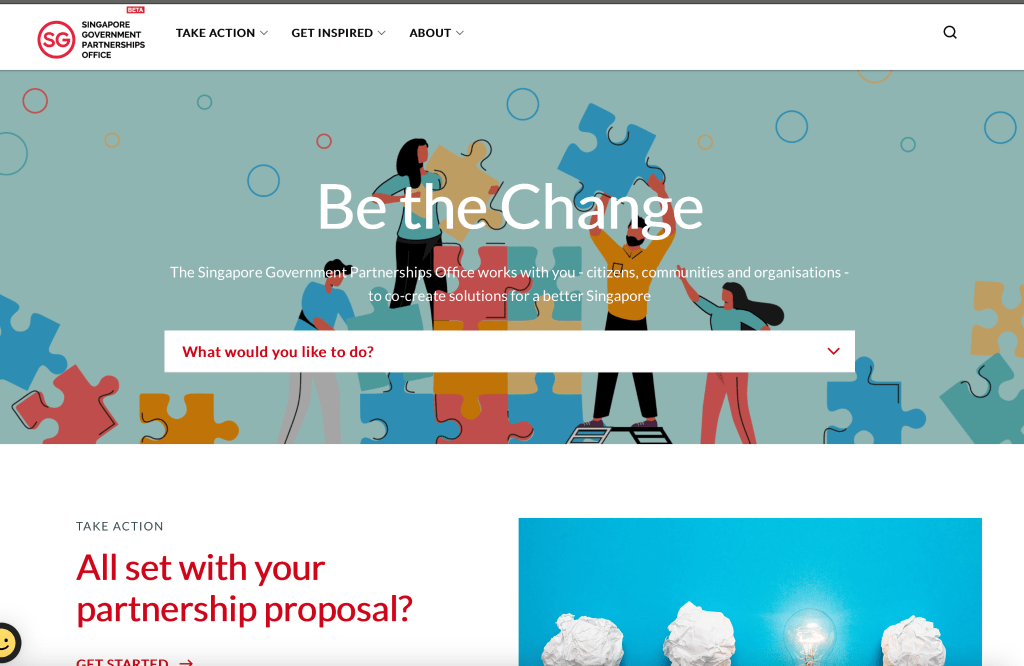
Due to the OSC project, the government created a new office for partnerships where they engage society starting from the grassroots. The government also set up a website, shown below, to attract partnership proposals. So in your own community, if you find something that can be improved you can rally people to submit a proposal to the government and if adopted, the government will provide resources to support you to develop the initiative for conversation. I believe this is the next phase of participatory democracy in which the citizens are empowered with resources and connections to solve a social issue at the community level, such as improving transportation in one’s area. So this is a new phase of social development which is not government-led but citizen-led.

#12/7 第六屆對話影響力獎頒獎典禮暨對話實驗室 即將開始 敬請期待
「對話影響力獎」的目的在肯定個人、組織、社區積極推動對話元素(平等待人、同理聆聽、浮現假設、包容等有效溝通方式) ,促進組織變革,達成創新社區發展或共創更完善的解決方案、政策,並藉此活動讓人們看見聆聽、包容多元就在你我的日常。
典禮下午舉行「對話實驗室」,創造一個對話的場域,透過對話三元素與對話流程,討論重要議題。
在此誠摯地邀請您,一起讓對話的影響力被看見!
活動時間:2024-12-07(六) 09:00 ~ 12:30 第六屆對話影響力頒獎典禮(台灣時間)
13:30 ~ 17:00 對話實驗室
活動地點:台北文創中心 6樓D廳
主辦單位: 財團法人朝邦文教基金會
協辦單位:EMBA雜誌
#2030 SDGs 桌遊認証引導師培訓 (2025/1/9~1/12) 報名即將開始 敬請期待
歡迎您加入認證引導師的行列,不僅能夠更近一步認識遊戲開發者背後的設計理念與精神,也能夠從有經驗的遊戲引導師身上學到如何使用這套桌遊,開啟應用的無限可能,擁有自己的一套桌遊,帶領參與者闊步邁向永續之路。
活動時間:2025/1/9 (四) 19:00~21:30
1/10~1/12 (五~日) 09:00~17:00
 朝邦文教基金會