
Topic: “Intentional Questioning for Deep Dialogue”
by Rhonda Sparks-Tranks, CPFIM
From <The Power of Dialogue- Conversations with Masters> series
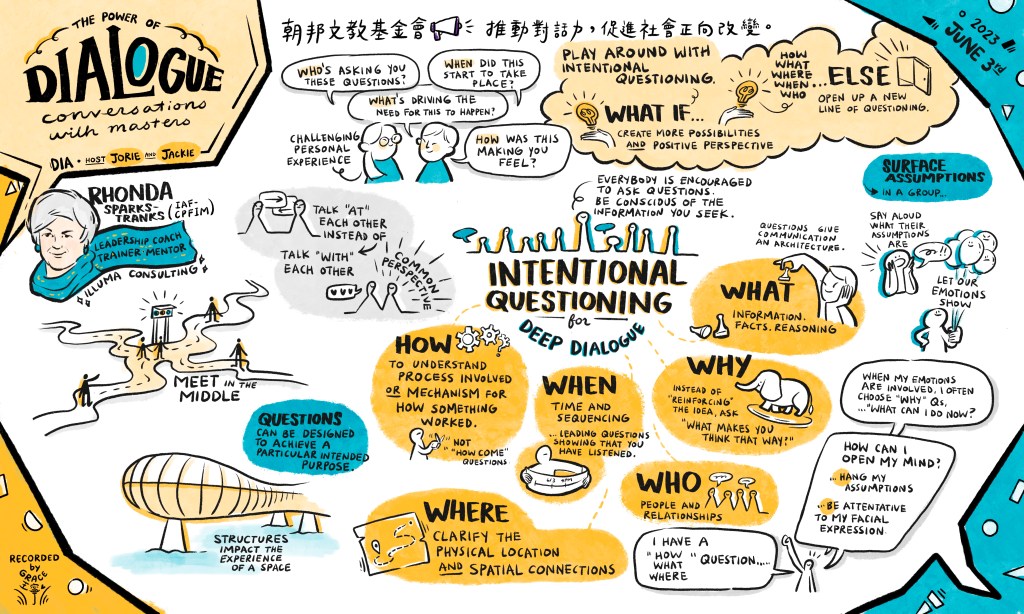
( graphic recorder: Grace Wang)
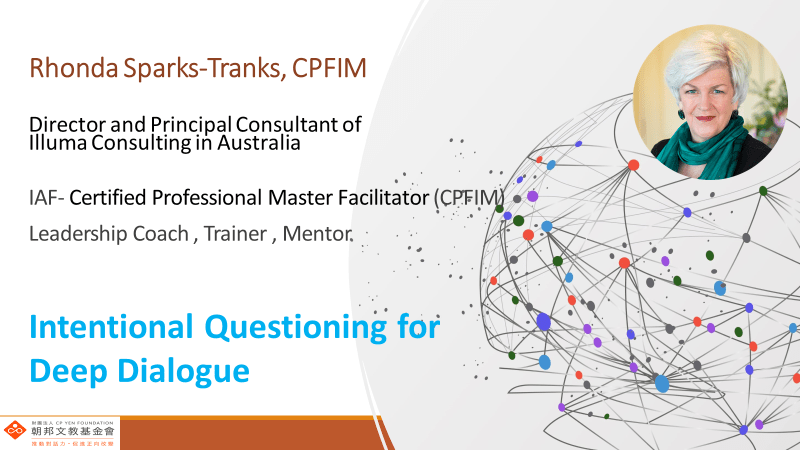
On 3 June 2023 IAF Certified Professional Master Facilitator and Assessor Rhonda Sparks-Tranks led the CP Yen Foundation’s “Dialogue with Masters” webinar on the topic of “Intentional Questioning for Deep Dialogue.”
How to ask a question that achieves your intended effect for deepening a dialogue?
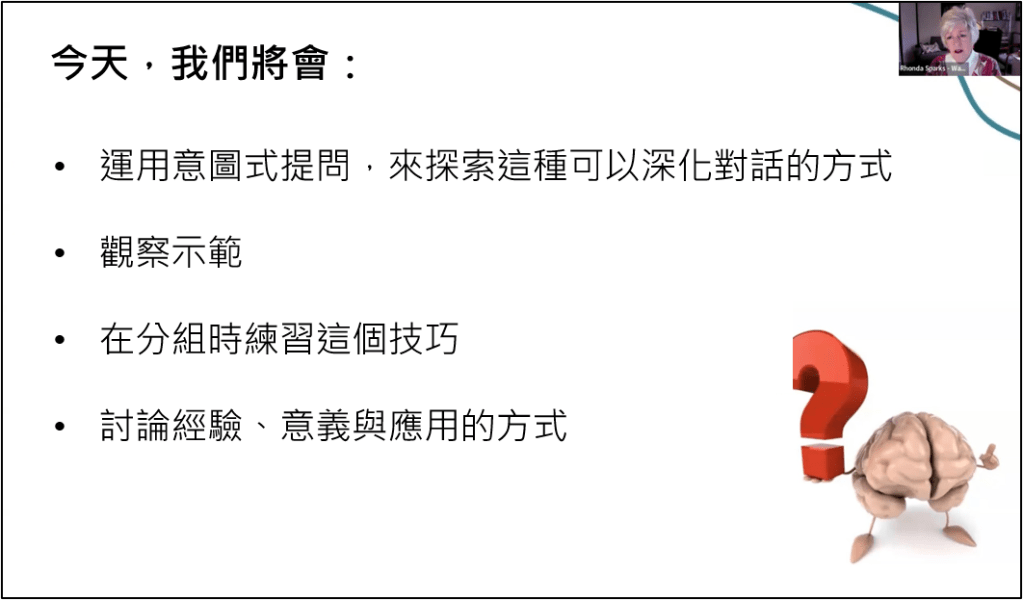
In the session Rhonda explained the fundamentals for how to develop a question to achieved deeper understanding in a dialogue. To exemplify the effect of different types of questioning, Rhonda invited a webinar participant to spontaneously tell a story of a challenging personal experience while she listened and asked specific questions. Insights about the art of intentional questioning emerged through group reflection and discussion. Rhonda concluded by sharing some tips about how to continue practicing to raise awareness on intentional questioning and invited us to join her upcoming workshops about holistic facilitation. The following article are notes and slides from the webinar with Rhonda Sparks-Tranks on 3 June 2023.
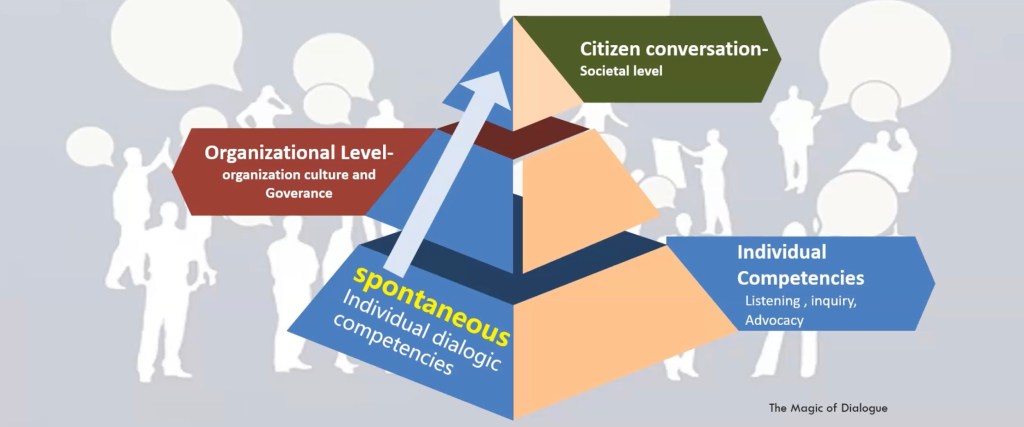
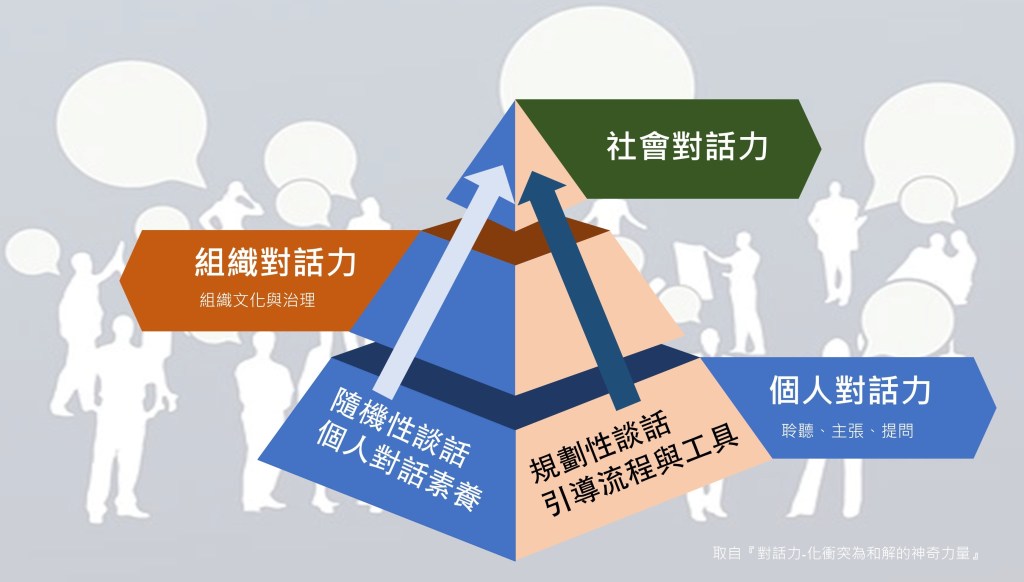
Dialogue competence is useful
Have you experienced the difference between people talking at one another versus talking with one another? “Talking at” often occurs when people are arguing their position. “Talking with” occurs when various positions integrate into a shared and common perspective. Communicating in a way that broadens and deepens understanding and relationships is a competence that’s useful for developing our society, organizations as well as ourselves.
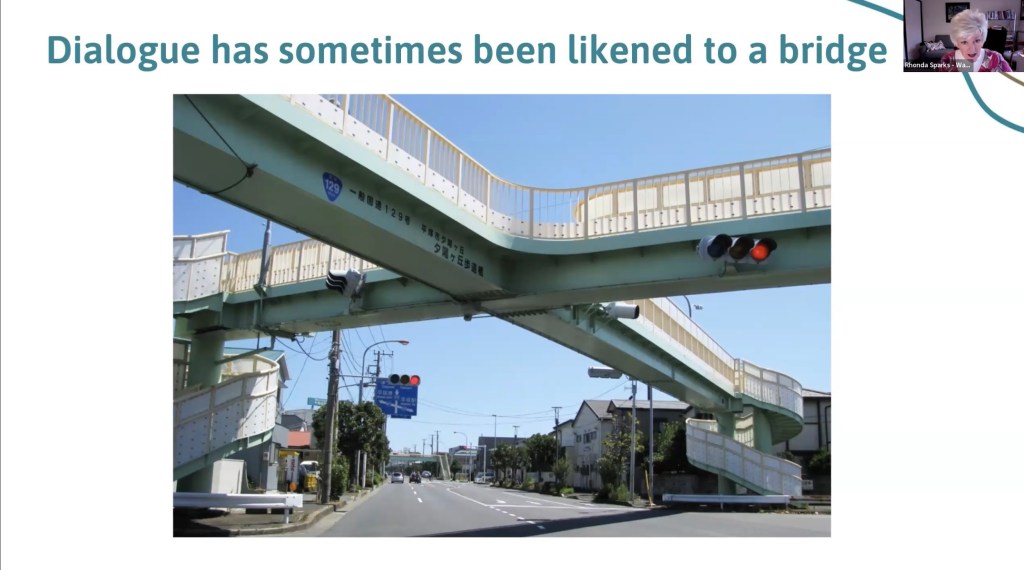
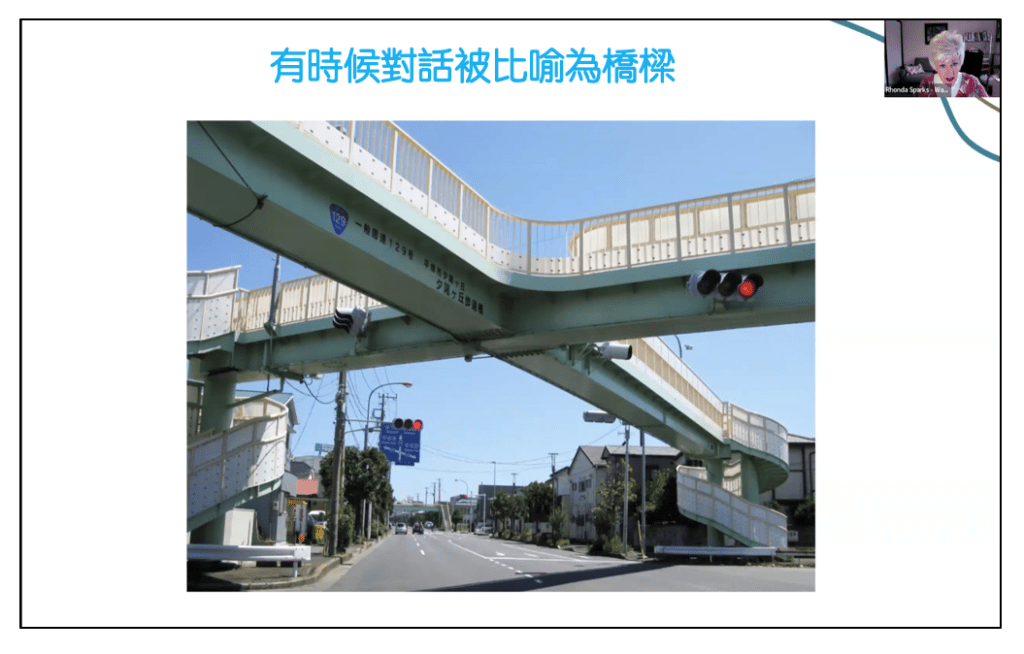
Dialogue is the moment of communication in which various positions meet and merge, like in this 4-way bridge image below.
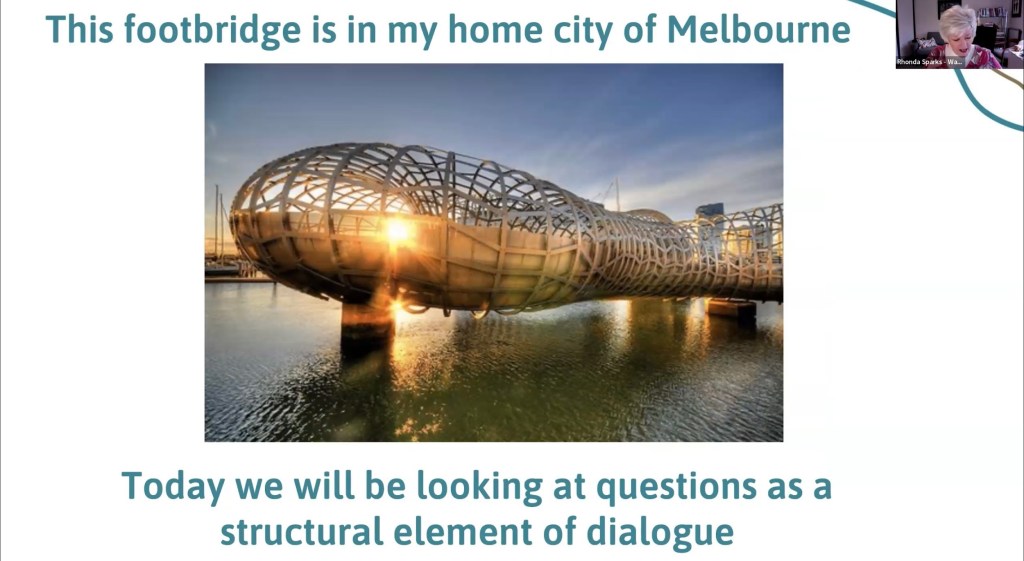
Questions give communication an architecture. The image below of a bridge in Melbourne exemplifies how structures impact the experience of a space.
As a structure for the dialogic space, questions can be designed to achieve a particular intended purpose.
To form purposeful questions the questioner must first have sufficient awareness of what they really want to know more about from the conversation. Questions could then be carefully chosen to reach the intended learning objective. To elaborate and this point, Rhonda defined the function of six common types of questions:
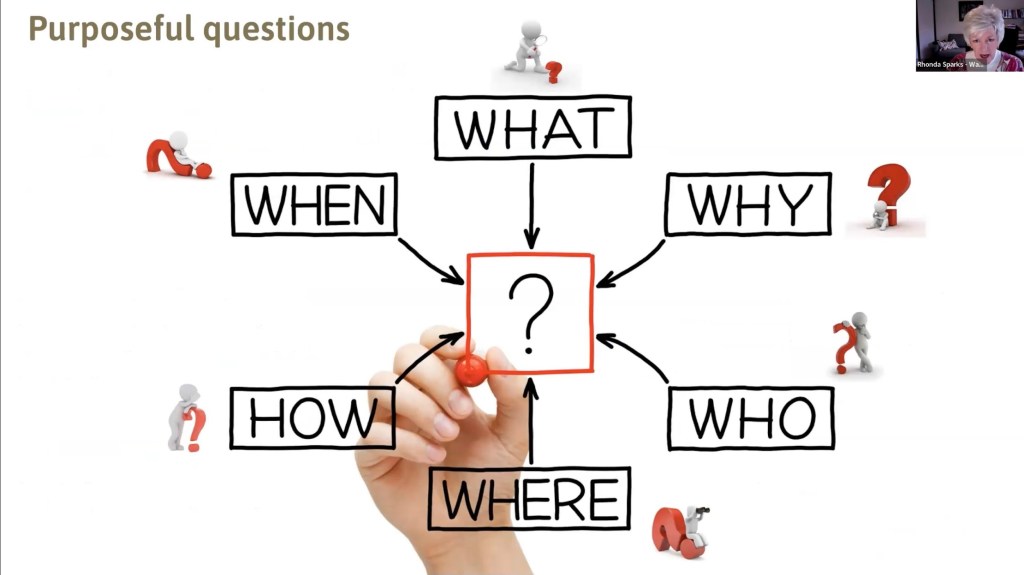
In summary:
- “What” questions ask for information, concrete and objective facts.
- “Why” questions explore the rationale for a person’s thinking.
- “Who” questions gather information about people and relationships. For instance, who was involved? Who was working with you when that happened?’
- “Where” questions clarify the physical location and spatial connections in a narrative. For example: Where were you when you did that?
- “When” questions focus on time and sequencing.
- “How” questions seek to understand the process or the mechanism for how something worked. For example: How did that happen? How did you do that? Could you tell me more about when you asked that question?
Rhonda demonstrated the impact of these six different types of questions by inviting a webinar attendee to tell a story of a personally challenging experience. The group’s learning focused on how Rhonda posed questions to the storyteller.
What the group noticed about Rhonda’s use of intentional questions:
- “I noticed that the why question generates an emotional response.”
- “I normally go directly to the “Why” question. But Rhonda asked other types of questions to elaborate the context and allow more information to emerge.”
- “In a real life dialogue there is a back and forth, so how does one maintain a question structure when there are several people asking questions?”
- Rhonda: The purpose of this exercise is to demonstrate the importance of one’s intention for asking a particular question. To expand a dialogue the facilitator can encourage participants to ask a variety of questions. The questioner’s awareness of the kind of information that s/he is looking for in the conversation is the driver for the type of question chosen.
- “My observation is that my male gender impacts how I ask questions and how I listen. I feel that men tend to respond quickly and give an answer. As I get older I find myself more frequently losing my patience and listening less. This is one of the reasons why I was interested to join this session to learn from you Rhonda.”
- Rhonda: Where do assumptions come from? Culture and gender affect the assumptions we bring, which is why awareness of oneself is necessary for asking purposeful questions.
During the following breakout session we practiced asking intentional questions by dialoguing on the topic: How do we surface assumptions underlying our work?
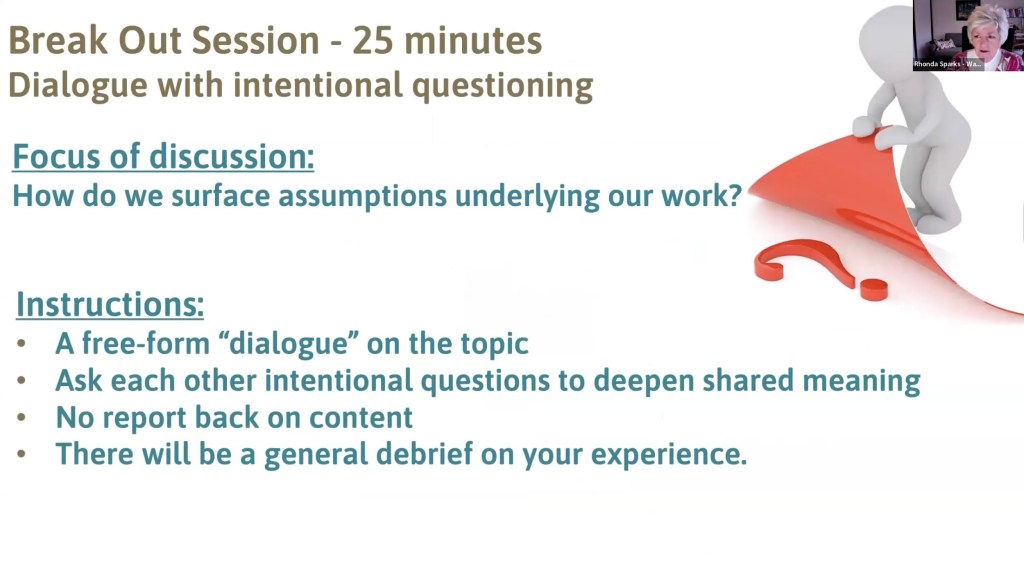
The purpose of the breakout session was not to solve the focus question, but rather to practice the art of dialogue and intentional questioning.
An example of how to practice:
- “I have a WHY question, I’m interested in the rationale behind your thinking…”
- “I have a WHO question, I’m interested in finding who was involved…. “
Post-Breakout session participant discussion:
- “If I am in an emotional situation, I usually ask a “why” question. Perhaps next time I can try asking myself instead “What can I do now?”
- Rhonda: That’s an excellent reflection. The default position is often to ask “why”, which provokes the speaker to justify or defend their position. However most of the learning in a dialogue comes from self-awareness!
- “I noticed that I asked myself the question: How can I open my mind? I realized that if I don’t open my mind, then I can’t enable the dialogue to go deeper. In the past, if I noticed a particular facial expression, or comment, or reaction from the person that I’m speaking with, it might cause me to close my mind. So I need to clarify the process or structure, or maybe the objectives or model in my mind to clarify what I’m noticing, then that will create a chance for the dialogue to go deeper.”
- Rhonda: When we’re in dialogue, what could we do to help open our mind?
- “For me, I will hang my assumptions first. I will say aloud what my assumption is. And if others can name their assumption first, that’s wonderful. I also need to be attentive to the expressions on my face. This reminds me of Michelle Yao’s recent commencement speech in which she advises students to “keep loose” to succeed in life.”
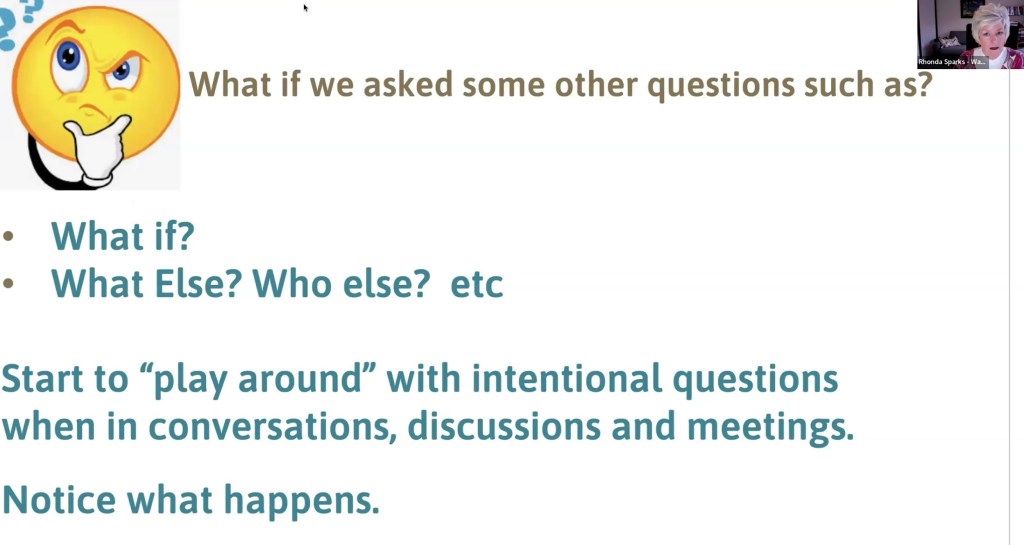
Rhonda: What else could we do to surface assumptions? In a group dialogue we could ask participants to say aloud what their assumptions are. Or, we could ask them to let their emotional reactions be seen. Notice how a slight difference in the way a question is asked can open up a whole other area of dialogue to be explored. Moreover, combining the 6 questions with the word “else” can open up a whole new line of questioning. For example, we can expand a dialogue by having someone in the group to ask:
- Who else…
- What else…
- When else has this happened?
- Where else in the world has this been happening?
Start to play around with intentional questioning. Ask yourself “what am I really asking about and wanting to know here? This will help to raise your own awareness. Practice in regular conversations to be more aware of the type of questions you’re asking, so that when you’re in a challenging dialogue you’re more competent to enable progress and purpose.
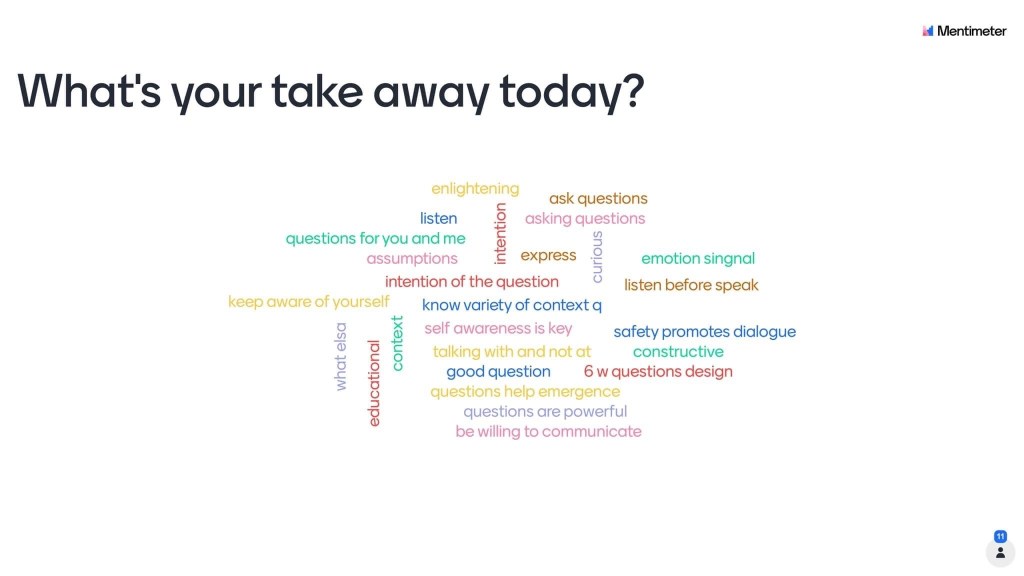
Participant’s takeaway from today’s session:
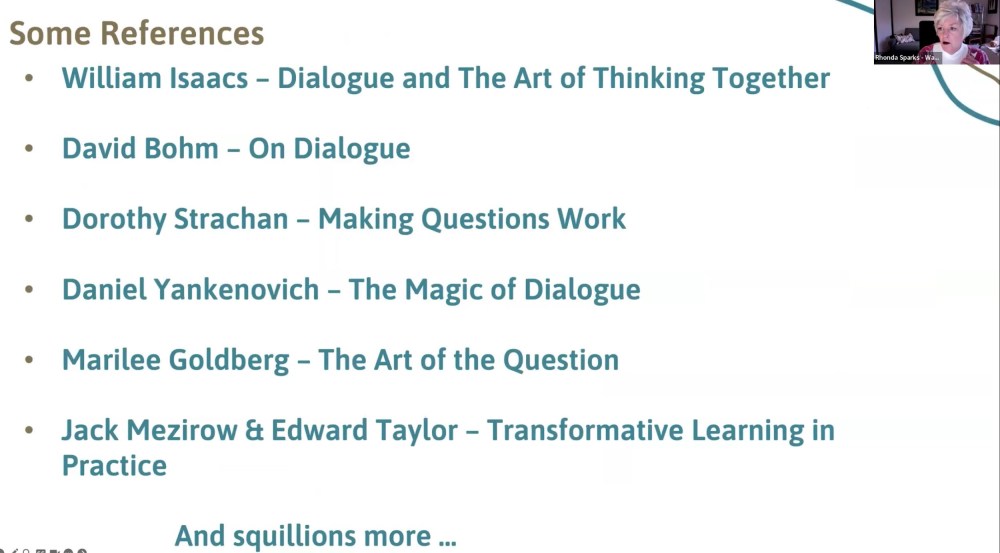
Opportunities to learn more about Rhonda Sparks-Tranks’ framework of holistic facilitation
2023朝邦文教基金會對話新訊息 – 夏季刊
The Power of Dialogue -Conversations with Master- Rhonda Sparks-Tranks , CPFIM
與大師對話系列:對話的力量 – 與 Rhonda Sparks-Tranks對話
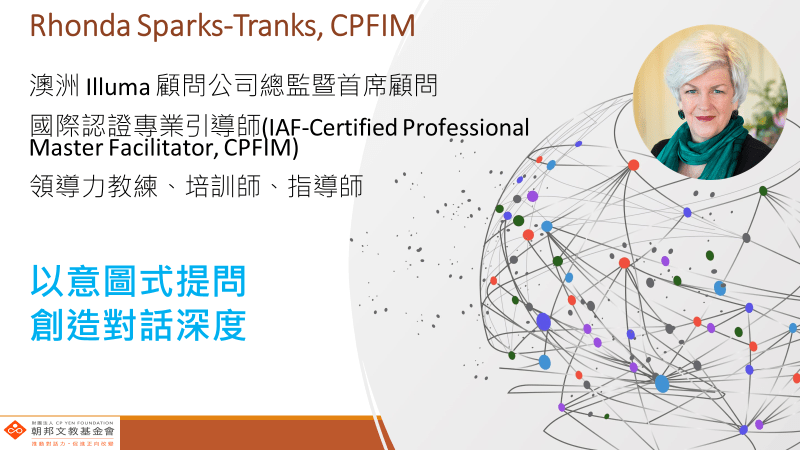
2023年6月3日,IAF 國際認證專業引導師與評審Rhonda Sparks-Tranks 引導朝邦文教基金會(CP Yen Foundation_舉辦的《與大師對話》網路論壇,主題為《以意圖式的提問,創造對話深度》。
如何提問出能夠達到您想要的效果,且能讓對話更深入的問題?
在這次的討論中,Rhonda首先說明一些基本的原則,解釋如何提出問題,以在對話中達到特定預期效果。她透過例句示範不同類型的提問的效果,並邀請一位在webinar上的參與者在描述一段人生經歷中感到挑戰的經驗,同時聆聽與提問具體的問題。大家對意圖式提問的藝術的洞察,也透過反思與討論慢慢浮現。最後Rhonda分享了一些技巧,指導大家如何持續練習,提升對於意圖式提問的覺察,也邀請大家參與她接下來即將舉行的關於全面性引導(Holistic Facilitation)的工作坊。以下文章是 2023 年6月3日與Rhonda Sparks-Tranks的網路webinar的一些筆記與投影片。
對話的能力是有用的
你有沒有體驗過「某人對你說話」跟「互相交談」的區別?「對某人說話」通常是人們爭論不同的立場,「互相交談」則是當不同立場融合成一個共同的觀點時發生,人們互相交談和互相交談之間的區別? 談論「經常發生在人們爭論他們的立場時。如果能夠用一種方式來溝通~可以讓彼此的理解與關係更寬廣、更深入的溝通方式,在發展我們的社會、組織與自我時,會是一個很有用的能力。
當不同的立場交會、綜合的時刻,像下面這張四向的天橋,就會產生對話。
問題賦予溝通結構。下面這張圖是一座在墨爾本的橋,就是很好的例子,示範結構如何影響一個空間的體驗。
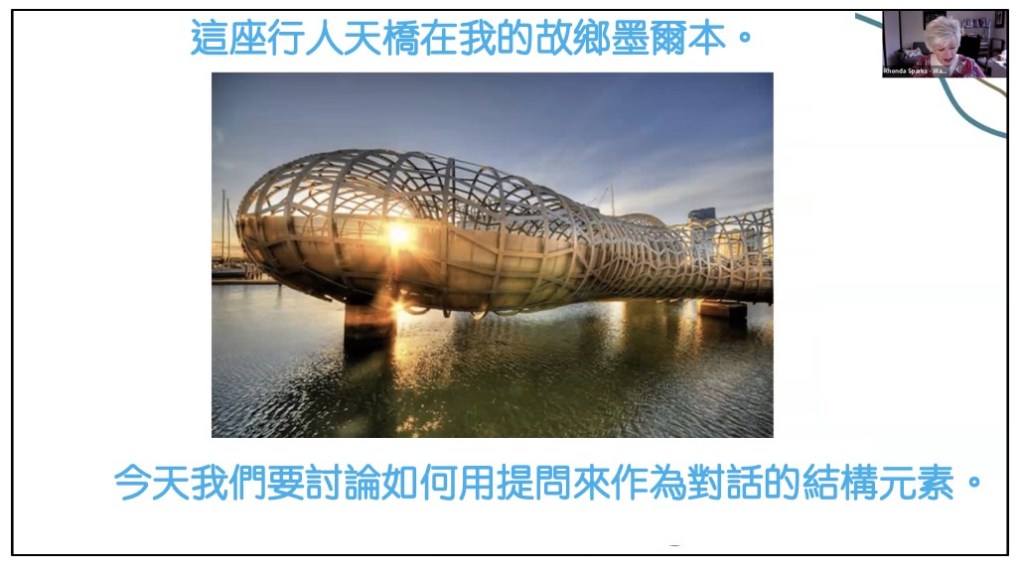
而在對話空間構成結構的問題,就可以透過設計達到想要的特定目的。
要構思有目的的問題,提問的人首先必須對自己在這段對話中真正想要的,有足夠的覺察。這樣才能謹慎地選用問題來達到期望的學習目標。就此,Rhonda 針對常見的六種問題的功能作出定義:
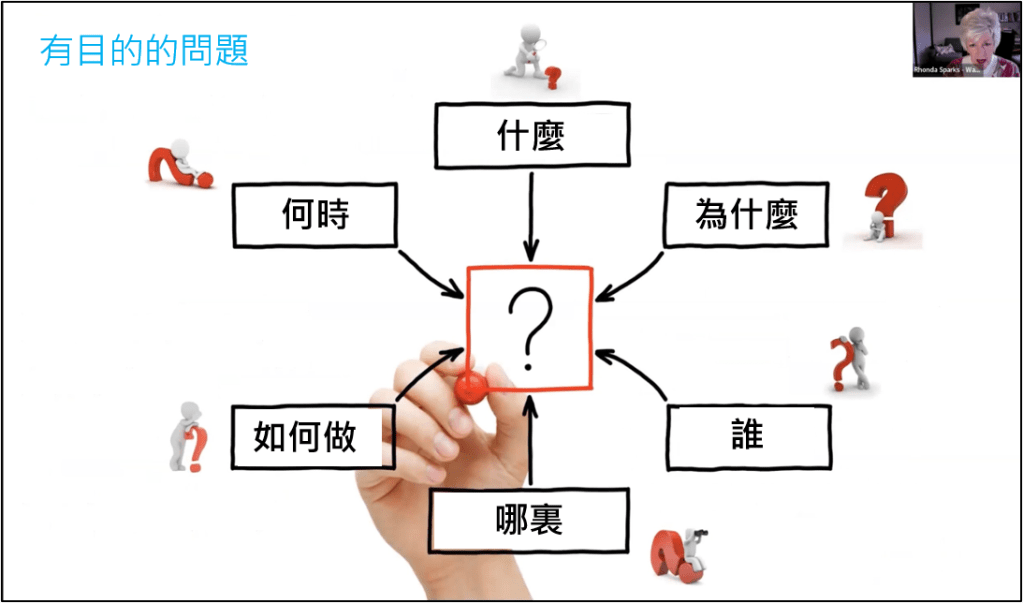
總結來說:
- 「What什麼」的問題尋求資訊、明確且客觀的事實
- 「Why為什麼」的問題探討一個人的思想的邏輯
- 「Who是誰」問題針對人與關係蒐集資料,比如說:是誰參與其中?發生的時候誰和你共事?
- 「 Where在哪裡」問題釐清某件事的實體地點和空間之間的關聯性,例如:你做這件事的時候人在哪裡?
- 「When何時」問題聚焦在時間與順序。
- 「How如何」的問題想要理解某樣東西發揮作用的過程或機制。比方說:這是怎麼發生的?你怎麼做出來的?你可以跟我說明你提問那個問題時的詳細狀況嗎?
Rhonda 示範這六種問題的效應,邀請一位參與者談及自己一個感到特別挑戰的故事。大家的學習焦點是Rhonda如何對這位敘述故事的人提問問題。
當Rhonda使用意圖式的問題(intentional questions)時,大家注意到以下的事項:
- 「我注意到為什麼的問題引發情緒化的反應。」
- 「我通常直接提問『為什麼』的問題,但是Rhonda提問其他類型的問題,讓背景的訊息更詳細,也讓更多的訊息浮現。
- 「在真正的對話中,是反覆來回的,但是當許多人都在提問問題時,如何維持問題的結構?」
- Rhonda:這個練習的目的就是示範一個人在提問特定問題時,意圖的重要性。如果要延展一段對話,引導師可以鼓勵參與者提問更多樣的問題。提問者對於自己想要在對話中尋找的訊息的體認,就會驅動提問的問題類型。
- 「我的觀察是,我的男性立場影響我問問題和聆聽的方式。我感覺到男性比較會很快地問問題跟回答。隨著我年齡的增長,我也注意到自己越來越沒有耐心,不願意聆聽。這也是為什麼我有興趣加入這場討論的原因之一,想要從您Rhonda學習更多。」
- Rhonda:「假設是源自於哪裡的?文化與性別影響我們的假設,這也是為什麼對自己的覺察,是提問有目的的問題的重要元素。」
在接下來的分組討論中,我們練習提問意圖式的問題,針對這個主題進行對話:我們該如何讓隱藏於工作內的假設浮現出來?
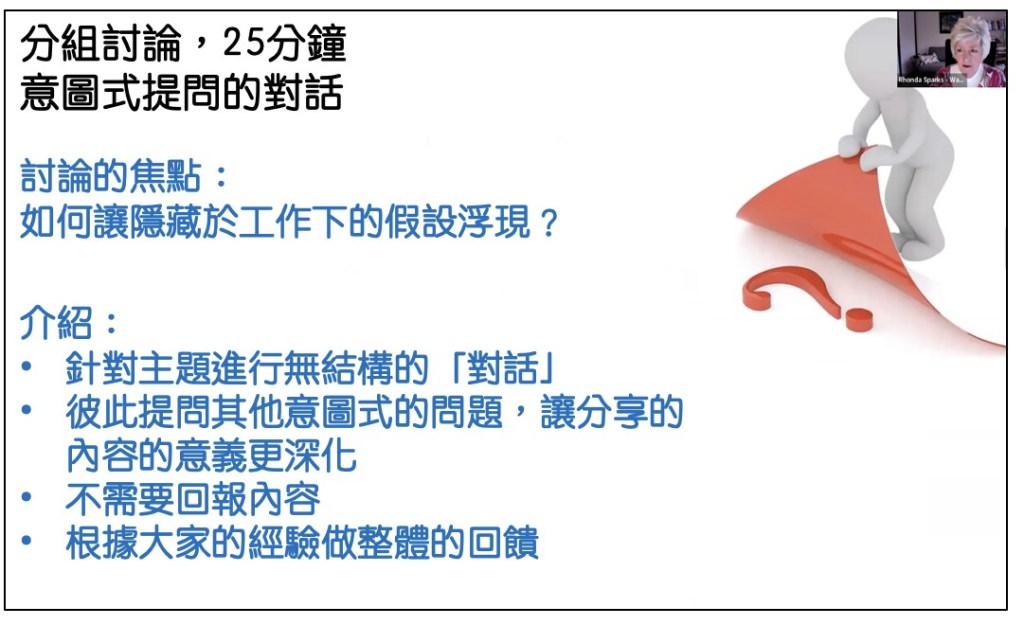
分組討論的目的並不是解決焦點問題,而是要練習對話的藝術以及意圖式的提問問題。
練習方式的示範:
- 「我有一個『為什麼』問題,我有興趣知道您的想法背後的理由…」
- 「我有一個『是誰』的問題,我有興趣了解有誰參與…. 」
分組討論針後的參與者討論:
- 「如果我身處情緒化的情況,我通常提問『為什麼』的問題。或許下一次我可以改成問我自己『我現在可以做什麼?』」
- Rhonda:這是很棒的反應。通常我們直覺的反應就是問『為什麼』,但是這讓對方想要捍衛自己的立場。但是對話中大部分的學習來自自我覺察!
- 「我注意到自己問這個問題:我如何敞開我的心房?我發現如果我不敞開心房,我就無法讓對話更深入。在過去,如果我注意到某種臉部表情,或是某個回應,或是跟我說話的人的某個反應,就可能讓我封閉自己。所以我需要釐清這個過程或結構,或者是我心裡面的目標或模式,讓我釐清自己注意到什麼,這就會讓我有機會讓對話更加深。」
- Rhonda:我們在對話時,可以做什麼來讓我們的態度更開放?
- 「對我而言,我會先把自己的假設懸浮起來。我會把自己的假設說出來,然後如果其他人也能將自己的假設說出來,那就很棒。我也需要注意我自己的臉部表情。這讓我想起楊紫瓊最近在一場畢業典禮的演說,她建議學生要擁有成功人生,就要『保持輕鬆』」
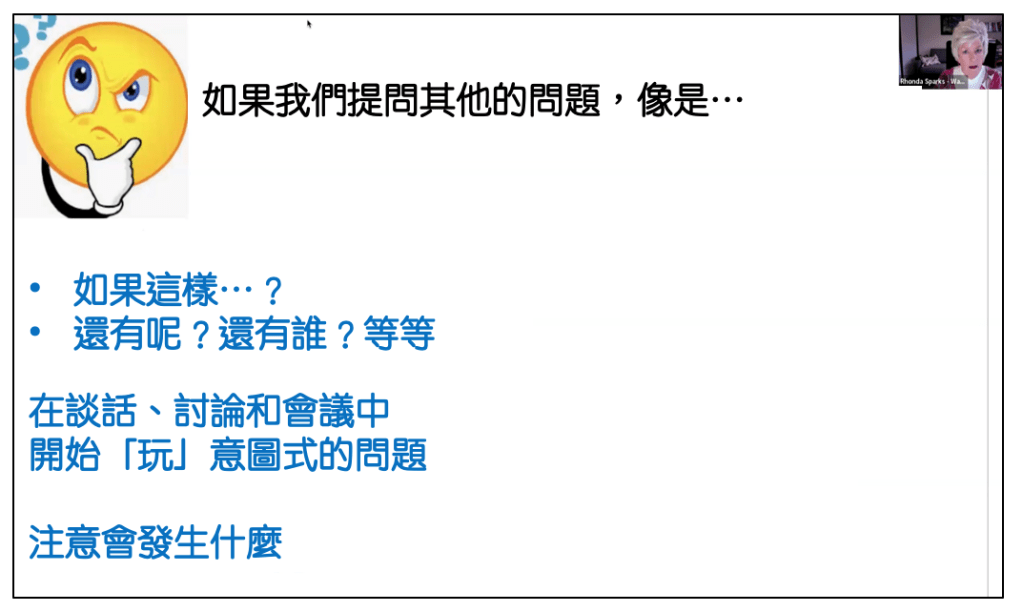
Rhonda:我們還能做什麼,來讓假設浮現出來?在團體的對話中,我們可以請參與者說出他們的假設。或者,我們可以請他們讓他們的情緒反應顯現出來,讓其他人看見。請注意問題提問的方式,可以打開另一個可以探索的對話領域。除此之外,用這六個問題,搭配「還有呢」也能開啟另一串問題。比方說,我們可以請團體裡面的人如此提問,延展這段對話:
- 還有誰…
- 還有什麼…
- 還有其他什麼時候曾經發生?
- 這在世界哪些其他的地方也發生過?
開始在這些意圖式的提問中做變化。問自己「我真正在問的、真正想知道的是什麼?」這會幫助你提升自我的覺察。練習在一般的談話中,更覺察你在提問的問題,這樣當你面臨挑戰的對話時,你就更能推動對話的過程與目的。
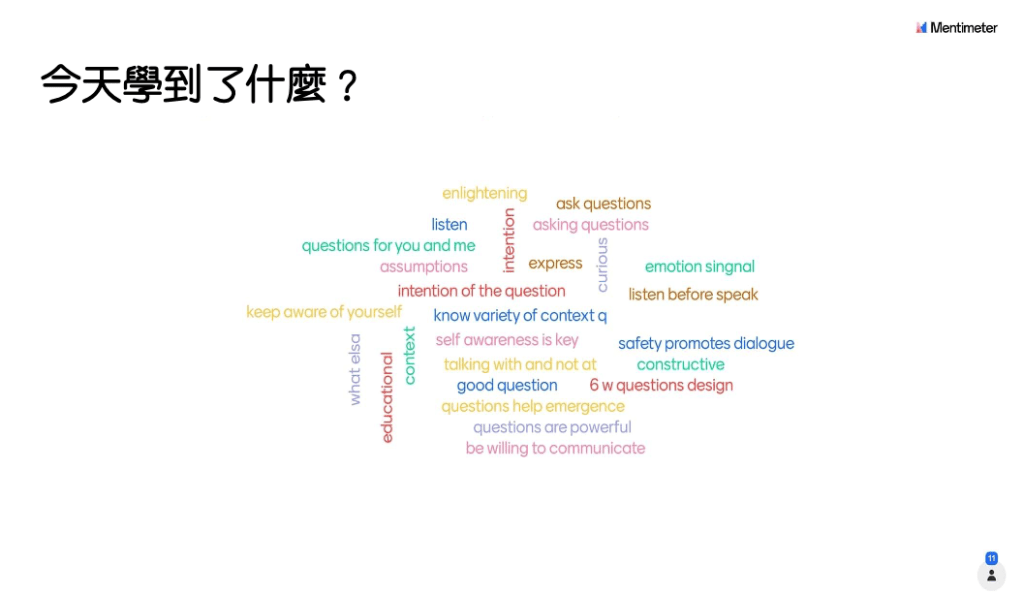

更多向Opportunities to learn more about Rhonda Sparks-Tranks學習全面性引導的結構的機會
2023對話影響力系列線上分享會-3
〈化解疾病的隔閡–讓對話成為照護的助力〉
根據衛服部統計數據,領有身心障礙證明的國人將近120萬人,占總人口的5%;多年來陸續發生的社會事件,凸顯身心障礙家庭在台灣的困境。當家庭成員罹患精神疾病,彼此的互動衝突、其他家人的身心負荷、親人關係的破碎、甚至出現生命安全的顧慮,當事人與其家人,總是艱難而孤立。伊甸基金會活泉之家的「敲敲話行動入家團隊」,以「開放式對話」為主軸,協助並支持家庭面對危機、重建關係。邀請朋友們一起來參與這場精彩的線上分享會!
主辦單位:朝邦文教基金會
分享來賓:
財團法人伊甸社會褔利基金會附設臺北市私立活泉之家 社工師 郭可盼
主持人:朝邦文教基金會引導師 張桂芬
日期:2023年7月3日(星期一)
時間:19:30~21:30 (台灣時間)
報名連結:https://www.accupass.com/event/2306010902103480910540
2023對話影響力系列線上分享會-4
〈來去宜蘭迺菜市場—走進市場與世界對話〉
你對傳統市場的印象是什麼?你會逛傳統市場嗎?而你會帶著孩子逛傳統市場嗎?傳統市場不只是社會縮影,更蘊藏著全球在地化的知識,連結從產地到餐桌的城鄉關係,亦是推廣食農教育的最佳場域之一。 音樂米創意產銷企業社透過四階段市場課程,帶領學校師生走回傳統市場,與市場職人重建主雇關係,為市場職人重拾自信,開啟跨世代跨領域與跨區域的對話契機。邀請朋友們一起來參與這場精彩的線上分享會!
主辦單位:朝邦文教基金會
分享來賓:
音樂米創意產銷企業社 社長 方子維
主持人:朝邦文教基金會引導師 陳明勇
活動時間:2023-08-07(一) 19:30 ~ 21:30(台灣時間)
活動地點:ZOOM(活動將以線上型式舉辦)
報名連結:https://www.accupass.com/event/2306260819221623091174
 朝邦文教基金會